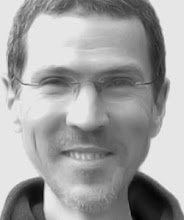
I call my column the view from down here because I believe the millions of us in wheelchairs do experience life from a different level, both physically and emotionally. As a schoolchild I recall joking with the tall kids and asking “What’s the weather like up there?”. We talk about overviews, helicopter views and worm’s eye views. I discovered another view the other day, one a little lower than mine, but brimming with enthusiasm and confidence, but let me start at the beginning . . .
Some time ago a father of a newly disabled daughter commented on an Internet discussion forum that there were no disabled children around. The thought stuck with me, and I wondered whether this was a fact, or merely a perception. Are there relatively fewer disabled children than disabled adults? The answer is both yes and no. Yes there are fewer children than adults, but there are also far too many disabled children. Research conducted at a care home for mentally disabled children revealed that 80% of them came about their state through motor vehicle accidents when their heads were smashed against windshields and dashboards. Add diseases such as ours into the equation, and birth defects, and other accidents and the numbers sadly mount.
So why then do we see so few disabled children in public? I believe the answer lies in a sense of embarrassment on the part of the parents and broader family. I can recall my mother telling me of the torrid times she had to endure when taking me out in public as a disabled child. Endless questioning, and often ridicule and chastisement. Fortunately for me, my mother had a thick skin, or she deliberately put one on. She brushed off the scrutiny and kept me in the public eye. Unfortunately she appeared to be in the minority.
In our local shopping mall, at any one time you can probably count 75 to 100 children under the age of 13, go to the larger malls and one can double or treble that figure easily. Now if 3% of the population is mobility disabled, a conservative figure, then one should see 2 to 3 disabled kids, or 4 to 6, or more. Yet one sees none. Where are they? Why are they being hidden away? What will become of them when they grow up?
In the midst of all this baggage, and social commentary, imagine my surprise therefore to chance upon five year old Angelo as he motored around the V&A Waterfront in his Permobil “Koala” powerchair. With not a care in the world he breezed in and out of stores, flicking the joystick with utmost precision and dexterity. We met in between the coats and trouser racks of an outdoor apparel store, and his interest was immediately pricked by my powerchair. Now we know that when two males meet it is only a matter of time before they begin talking about cars. When two powerchair males meet, well, it is only a matter of time before they begin talking about their motors. And so Angelo quickly demonstrated to me that although his chair might have been lower to the ground than mine it did however have seat elevation, and tilt. He also asked about top speed. Who wouldn’t? I countered that my rapidly greying hair permitted me to travel a bit more sedately. Whew! Off the hook. Then we moved on to manoeuvrability, and control switches, and joystick mounts. Heady stuff that would have a Formula One commentator scrambling for words.
What struck me during our brief time together was the confidence, control and calm that young Angelo possessed. He wasn’t concerned about the throngs of people in the mall, in his powerchair he was his own man. He was in control of his body and the environment he was in. He was secure, and comfortable and confident in his own ability to propel himself. I knew exactly how he felt.
Watching young Angelo weave effortlessly through the shopping mall I could not help but wish that his future would be as clear as the freedom he was experiencing in the moment. Wouldn’t it be liberating if there were more Angelo’s out in the public view? Wouldn’t it be enlightening if more people could be inspired by his presence? Wouldn’t it be encouraging if the public infrastructure was more accommodating to disabled children?
Education, social interaction, employment, and building a home and family were the last things on Angelo’s mind in the V&A Waterfront, and rightly so. Right then, right there, despite his profound disability, he was able to “walk” with his Mom and Dad and siblings, just like all the other kids in the mall.
Thursday, February 11, 2010

Tuesday, January 5, 2010
Attitude
When I hear the term "attitude" being applied to an individual I have this picture pop up in my mind of a gangster rapper, hand on hip, staring over the top of their shades, or one of those big African American ladies who talks while wiggling her neck from side to side.
It's a Hollywood vision, but attitude is more than a show. It is a philosophy, a mindset, a character trait, one we, as disabled, need plenty of. It is the space that separates success from failure, happiness from despair, achievement from indifference. Attitude is not necessarily something you "have", like a bad mood, or a common cold. It is rather something which is inside one's core being, a sort of "inner outlook" which governs how we go about our lives. Some people with really profound levels of disability achieve success, whilst others with relatively minor afflictions struggle and often fall by the wayside. No-one knows how our disability affects our lives and our persona other than ourselves, but our attitude to it, and the environment surrounding us is what determines whether we succeed or fail in managing and living with our disability.
Attitude is influenced by our knowledge, education, skills, support structure and economic situation. I say influenced, because having one or more of these is no guarantee of success. It is what we make of them which really matters. They are floating opportunities bobbing around us in a swimming pool. We can reach out and embrace one or more of them, or we can push them away. Either way it will affect how we cope in that pool, how long we can stay afloat, and whether we enjoy the swim!
This is perhaps particularly relevant to MD sufferers since so many of us contracted the disease as children. How we were raised influenced our attitude, and formed the foundation of our adult character. If that character did not "fit" with our later reality of education, employment, independent living, friendships, etc then it placed us at odds with all around us, a situation which would in turn influence our attitude. It is easy to see how a negative attitude can quickly become self-perpetuating, but of course the opposite is also true. It is vital that young disabled individuals are developed to have a high self-esteem, positive view of themselves, and never under-estimated. Failure to do so will damage their attitude, something which could end up being as debilitating as their physical condition.
Into this whole attitude equation we also need to factor in our life expectations. What do we expect from family, friends, work, the government or religion? The combination of our attitude "to" things, and our expectations "of" things determines how we are likely to deal with life. Those who enjoy success in their disabled lives generally have the ability to blur the lines between disability and able-bodied.
We cannot clearly define exactly what attitude is but we know that the presence of disability can magnify its effects. A bad environment can affect us negatively, but we can grab hold of a good thing, absorb it, and use it to break out into a better environment. Whether we take advantage of opportunities or allow them to overwhelm us is determined by our attitude. It is something which is very definitely within our control. We cannot change the way we feel, but we can change the way we see things, and that will change the way we feel.
Some believe we are either "hard wired", like an electrical circuit, to deal with disability, or we are not. You can cope, or you can't. Simple as that. It is an interesting theory, but not one I am entirely convinced of. I believe we can change, and just as our disability changes us physically so we can change mentally and emotionally to adapt to it. Our biggest obstacle is sitting on top of our shoulders. As our set of abilities changes so we need to assess what we can do, and live within those abilities. We have a disability which is trying to take control of our lives and our attitude is going to determine how we keep control. The physical realities can often outweigh optimism but that's not a reason to give in. It takes time and a re-learning of life, to gain the ability to live freely.
Attitude is a defining characteristic in determining if an individual will reach their full potential, irrespective of disability. Someone once said life is 10% of what happens to you and 90% of what you make of it. In our quest to find our goals and the means to achieve them it might be worthwhile to reflect on these words . . .
"So judge not another for their toil,
It’s to themselves they answer in life,
Be it truth or lie,
To God they answer when they die,
The real why." . . . . . (Ralf, Nikkei)
It's a Hollywood vision, but attitude is more than a show. It is a philosophy, a mindset, a character trait, one we, as disabled, need plenty of. It is the space that separates success from failure, happiness from despair, achievement from indifference. Attitude is not necessarily something you "have", like a bad mood, or a common cold. It is rather something which is inside one's core being, a sort of "inner outlook" which governs how we go about our lives. Some people with really profound levels of disability achieve success, whilst others with relatively minor afflictions struggle and often fall by the wayside. No-one knows how our disability affects our lives and our persona other than ourselves, but our attitude to it, and the environment surrounding us is what determines whether we succeed or fail in managing and living with our disability.
Attitude is influenced by our knowledge, education, skills, support structure and economic situation. I say influenced, because having one or more of these is no guarantee of success. It is what we make of them which really matters. They are floating opportunities bobbing around us in a swimming pool. We can reach out and embrace one or more of them, or we can push them away. Either way it will affect how we cope in that pool, how long we can stay afloat, and whether we enjoy the swim!
This is perhaps particularly relevant to MD sufferers since so many of us contracted the disease as children. How we were raised influenced our attitude, and formed the foundation of our adult character. If that character did not "fit" with our later reality of education, employment, independent living, friendships, etc then it placed us at odds with all around us, a situation which would in turn influence our attitude. It is easy to see how a negative attitude can quickly become self-perpetuating, but of course the opposite is also true. It is vital that young disabled individuals are developed to have a high self-esteem, positive view of themselves, and never under-estimated. Failure to do so will damage their attitude, something which could end up being as debilitating as their physical condition.
Into this whole attitude equation we also need to factor in our life expectations. What do we expect from family, friends, work, the government or religion? The combination of our attitude "to" things, and our expectations "of" things determines how we are likely to deal with life. Those who enjoy success in their disabled lives generally have the ability to blur the lines between disability and able-bodied.
We cannot clearly define exactly what attitude is but we know that the presence of disability can magnify its effects. A bad environment can affect us negatively, but we can grab hold of a good thing, absorb it, and use it to break out into a better environment. Whether we take advantage of opportunities or allow them to overwhelm us is determined by our attitude. It is something which is very definitely within our control. We cannot change the way we feel, but we can change the way we see things, and that will change the way we feel.
Some believe we are either "hard wired", like an electrical circuit, to deal with disability, or we are not. You can cope, or you can't. Simple as that. It is an interesting theory, but not one I am entirely convinced of. I believe we can change, and just as our disability changes us physically so we can change mentally and emotionally to adapt to it. Our biggest obstacle is sitting on top of our shoulders. As our set of abilities changes so we need to assess what we can do, and live within those abilities. We have a disability which is trying to take control of our lives and our attitude is going to determine how we keep control. The physical realities can often outweigh optimism but that's not a reason to give in. It takes time and a re-learning of life, to gain the ability to live freely.
Attitude is a defining characteristic in determining if an individual will reach their full potential, irrespective of disability. Someone once said life is 10% of what happens to you and 90% of what you make of it. In our quest to find our goals and the means to achieve them it might be worthwhile to reflect on these words . . .
"So judge not another for their toil,
It’s to themselves they answer in life,
Be it truth or lie,
To God they answer when they die,
The real why." . . . . . (Ralf, Nikkei)
Tuesday, December 1, 2009
I'm Walking Backwards To Christmas
With apologies to Spike Milligan!
His famous ditty goes . . .
"I'm walking backwards to Christmas,
Across the Irish Sea,
I'm walking backwards to Christmas,
It's the only thing for me,
I've tried walking sideways,
And walking to the front,
But people just look at me,
And say it's a publicity stunt".
I don't actually go out with the express purpose of riding over able-bod's feet. I drive in a predictable manner. No zig-zagging, or stop-starting. But, able-bod's appear to see nothing below their eye level. They also appear to follow Spike Milligan's example and walk backwards more than they walk forwards. It all comes down to a simple affliction, these people don't look where their feet are pointing. We've got MD, kids munching fast food supposedly have ADD, but these folks have DoLoWheTFAP.
There is something strange about the way people walk. It's not noticeable in open spaces, but put them in a busy public place, and they all begin to walk backwards. They step backwards in shopping queues, they step backwards from shop windows, they walk backwards whilst talking to friends. Of course, to us invalids, the genuinely amusing thing is that look of distress, pain, and often anger on the offending able-bods face when they bash into you. Well, amusing is possibly the wrong word, maybe "satisfying" is better. It certainly is satisfying seeing them ricochet off my 140kg powerchair clutching a damaged foot or knee. Bingo! 20 points for another able-bod!
Add cellular technology to the equation and you really spice things up. Now, not only is their sense of direction gone, but their minds as well. Maybe it's the dangerous emissions radiating from the cellphone. Whatever it is, it appears to have the same reaction on the human brain whether they are driving a car, or walking. When the mouth and ear are otherwise engaged all contact is lost with the world, and by that I mean the entire world, even that just one metre away.
My years of wheeling has led me to the conclusion that, at least from a pedestrian point of view, humans are closely related to squirrels . . . you know, in the way squirrels run, hesitate, run, hesitate across roads. Well able-bod's do the same, they walk, stop, walk, stop. I recall one memorable incident in a local mall when an able-bod saw me coming and stopped, so I aimed to pass in front of him, then he stepped forward, so I compensated to drive around his back, then he stopped again, so I corrected, then he stepped forward again, and I nailed him, both feet, right over the arches. When you're as dumb as he was then you deserve to get run over. It was the Darwin Theory alive and well and on public view. This lack of pedesrian skills generates a quite satisfying crunching sound of bone being compressed between solid rubber and solid floor . . . usually followed by a high pitched squeal.
My first powerchair was very lightweight, and people bumping into me, and stumbling over me, used to knock the chair off its four wheels. They then used to try and compensate by reaching out and grabbing me, partly to steady themselves, and partly out of guilt to steady me. This resulted in my being grabbed by complete strangers around the head and shoulder region. Not a socially acceptable practice in my opinion. Fortunately the weight and stability of my present powerchair is re-assuring, for me, and downright scary for the squirrel. You would have to be a MacDonalds gold card client to knock my powerchair over. I feel secure, both physically, and in the knowledge that in any coming together of powerchair and squirrel, the rodent will always come off second best. I also no longer get groped or grabbed because while they're doing the two-step-of-pain I am long gone.
I drive my powerchair very well and responsibly, I do not speed excessively in public places, I am careful around small children, and I never bump into furniture. I am however unable to read people's minds, so when they exhibit squirrel-like behaviour in my path I do not feel even the slightest bit of guilt over crushing toes or clipping heels. Spike would have approved.
His famous ditty goes . . .
"I'm walking backwards to Christmas,
Across the Irish Sea,
I'm walking backwards to Christmas,
It's the only thing for me,
I've tried walking sideways,
And walking to the front,
But people just look at me,
And say it's a publicity stunt".
I don't actually go out with the express purpose of riding over able-bod's feet. I drive in a predictable manner. No zig-zagging, or stop-starting. But, able-bod's appear to see nothing below their eye level. They also appear to follow Spike Milligan's example and walk backwards more than they walk forwards. It all comes down to a simple affliction, these people don't look where their feet are pointing. We've got MD, kids munching fast food supposedly have ADD, but these folks have DoLoWheTFAP.
There is something strange about the way people walk. It's not noticeable in open spaces, but put them in a busy public place, and they all begin to walk backwards. They step backwards in shopping queues, they step backwards from shop windows, they walk backwards whilst talking to friends. Of course, to us invalids, the genuinely amusing thing is that look of distress, pain, and often anger on the offending able-bods face when they bash into you. Well, amusing is possibly the wrong word, maybe "satisfying" is better. It certainly is satisfying seeing them ricochet off my 140kg powerchair clutching a damaged foot or knee. Bingo! 20 points for another able-bod!
Add cellular technology to the equation and you really spice things up. Now, not only is their sense of direction gone, but their minds as well. Maybe it's the dangerous emissions radiating from the cellphone. Whatever it is, it appears to have the same reaction on the human brain whether they are driving a car, or walking. When the mouth and ear are otherwise engaged all contact is lost with the world, and by that I mean the entire world, even that just one metre away.
My years of wheeling has led me to the conclusion that, at least from a pedestrian point of view, humans are closely related to squirrels . . . you know, in the way squirrels run, hesitate, run, hesitate across roads. Well able-bod's do the same, they walk, stop, walk, stop. I recall one memorable incident in a local mall when an able-bod saw me coming and stopped, so I aimed to pass in front of him, then he stepped forward, so I compensated to drive around his back, then he stopped again, so I corrected, then he stepped forward again, and I nailed him, both feet, right over the arches. When you're as dumb as he was then you deserve to get run over. It was the Darwin Theory alive and well and on public view. This lack of pedesrian skills generates a quite satisfying crunching sound of bone being compressed between solid rubber and solid floor . . . usually followed by a high pitched squeal.
My first powerchair was very lightweight, and people bumping into me, and stumbling over me, used to knock the chair off its four wheels. They then used to try and compensate by reaching out and grabbing me, partly to steady themselves, and partly out of guilt to steady me. This resulted in my being grabbed by complete strangers around the head and shoulder region. Not a socially acceptable practice in my opinion. Fortunately the weight and stability of my present powerchair is re-assuring, for me, and downright scary for the squirrel. You would have to be a MacDonalds gold card client to knock my powerchair over. I feel secure, both physically, and in the knowledge that in any coming together of powerchair and squirrel, the rodent will always come off second best. I also no longer get groped or grabbed because while they're doing the two-step-of-pain I am long gone.
I drive my powerchair very well and responsibly, I do not speed excessively in public places, I am careful around small children, and I never bump into furniture. I am however unable to read people's minds, so when they exhibit squirrel-like behaviour in my path I do not feel even the slightest bit of guilt over crushing toes or clipping heels. Spike would have approved.
Monday, November 2, 2009
The Power Of Power
Mankind underestimates the subtleties of body language. It’s a skill that we develop through observation and experience, and then carry with us subliminally for the rest of our lives. Well anyway, some of us do, others don’t. We learn it through watching our parents, family and peers. They are learned rather than taught, for no good reason other than that most parents do not understand the power, or possibly even understand the role, of body language. If able-bodied people struggle to come to grips with body language then how much more so is it for the mobility impaired?
Research has shown that female chimpanzees and gorillas that are born in captivity do not always have the skills to be good mothers. It’s a skill learned, not inherited or genetically ingrained. In much the same way the skills of body language are learned, and if the environment is such that learning is inhibited then we loose out.
Interaction with our fellow man is an integral part of our human nature. This is most often seen as a verbal medium, but body positioning, body movement, and gestures play a vital role. Gestures are not limited to hand, arm, or head movements, they are also performed with the whole body. Consider a meeting of three people . . . hold the meeting firstly over a telephone (i.e. no visual contact), now hold it around a table with everyone being seated, and then hold the same meeting with the three standing freely in an open room. The results would differ in each case, as the parties involved were able to utilise additional skills. Organisations such as Toastmasters who deal with communication every day around the world will tell you of the importance of body positioning when speaking. The body can be used to project positive or negative, re-assuring or distancing images. It can draw the audience in, or push them away. It can emphasize a point, or dismiss it. These rules apply regardless of whether the audience is measured in hundreds, a small group, or one.
Severely mobility impaired people will understand and appreciate the frustrations of being “rooted to the spot”. The mind knows what it wants, but the body cannot provide the solution. In the office, at a cocktail party, at home, able-bodied people move around one, stepping in and out of one’s personal space, in and out of conversation, in and out of one’s sphere of influence. In the game of body language it is not so much a question of “mobility”, rather one of “ability”. The ability to move during a conversation, the ability to gesture, the ability to turn to face someone, the ability to turn one’s back, the ability to “step” forward to greet someone, and the ability to “leave”. These are the subtle movements that are only measured in seconds taken, or centimetres moved, but the messages they convey are huge. Many severely disabled people complain of feeling like seated puppets, able to speak, but dependent on another for movement and motion. The powerchair can make the first move, the powerchair can control proceedings, and the powerchair can lead. A powerchair puts these abilities in their own hands. A powerchair user can achieve this with the flick of a joystick. Gone are the struggling movements to move a wheelchair on deep pile carpets. One can re-position without even breaking eye contact!
The powerchair can be an incredible accessory to communication if used effectively. It can be open and inclusive when positioned to face one’s audience. It can be furtive and elusive if kept on the move, never allowing the subject to settle. It can be final and conclusive when swiftly turned away. Whilst these initially may sound manipulative, pre-meditated, or calculated they quickly become natural when used in conjunction with the rest of one’s communication media, such as eyes, voice, and hands. It’s a transition phase, only lasting as long as it takes one to catch up with able-bodied mankind! Few powerchair users have been motorised since their youngest years. Most only manage to obtain access to a powerchair in their teens or later. This means that they have essentially missed out on those formative years of body language development.
It’s a strange thing but a powerchair gives one a distinctly physical presence. Somehow a normal manual wheelchair projects itself as a “chair with wheels”, but a powerchair demands attention. When you cruise into a room people notice! It becomes an extension of one’s personality. I often find myself “pacing” in the powerchair whilst waiting for lifts, something which is impossible in my manual chair. I can impose myself by riding straight up to someone, or can calm things down by slowly idling through a shopping mall, or lift the pace considerably when I’m purposeful or in a hurry. If I’m feeling full of fun I find myself weaving around furniture, spinning circles in shopping malls, speeding up and slowing down, or zooming over the grass lawns of Kirstenbosch when everyone else is sticking to the paths. If I’m annoyed and in a crowd I can hold my line and force people to avoid me. I can sneak up on my wife when she’s engrossed in a book. I can walk my own line when out with friends. It’s the games we all play.
Parents of severely mobility-impaired children need to be more aware than most of the importance of these skills, how their child can learn them, and more importantly how to put them to good use. As a member of the human race we have to accept that communication is integral to our makeup, we are sociable animals. In order for disabled children to achieve equity within the broader community they need to use communication and personality skills even more effectively than their able-bodied counterparts in order to compensate for physical shortfalls. Using a powerchair need not be seen as slipping down the ability ladder. Far from it. It is an empowering instrument, it gives more than it takes. It allows one to say “I am in control, I decide when and how I wish to move”. It’s the power of power.
Research has shown that female chimpanzees and gorillas that are born in captivity do not always have the skills to be good mothers. It’s a skill learned, not inherited or genetically ingrained. In much the same way the skills of body language are learned, and if the environment is such that learning is inhibited then we loose out.
Interaction with our fellow man is an integral part of our human nature. This is most often seen as a verbal medium, but body positioning, body movement, and gestures play a vital role. Gestures are not limited to hand, arm, or head movements, they are also performed with the whole body. Consider a meeting of three people . . . hold the meeting firstly over a telephone (i.e. no visual contact), now hold it around a table with everyone being seated, and then hold the same meeting with the three standing freely in an open room. The results would differ in each case, as the parties involved were able to utilise additional skills. Organisations such as Toastmasters who deal with communication every day around the world will tell you of the importance of body positioning when speaking. The body can be used to project positive or negative, re-assuring or distancing images. It can draw the audience in, or push them away. It can emphasize a point, or dismiss it. These rules apply regardless of whether the audience is measured in hundreds, a small group, or one.
Severely mobility impaired people will understand and appreciate the frustrations of being “rooted to the spot”. The mind knows what it wants, but the body cannot provide the solution. In the office, at a cocktail party, at home, able-bodied people move around one, stepping in and out of one’s personal space, in and out of conversation, in and out of one’s sphere of influence. In the game of body language it is not so much a question of “mobility”, rather one of “ability”. The ability to move during a conversation, the ability to gesture, the ability to turn to face someone, the ability to turn one’s back, the ability to “step” forward to greet someone, and the ability to “leave”. These are the subtle movements that are only measured in seconds taken, or centimetres moved, but the messages they convey are huge. Many severely disabled people complain of feeling like seated puppets, able to speak, but dependent on another for movement and motion. The powerchair can make the first move, the powerchair can control proceedings, and the powerchair can lead. A powerchair puts these abilities in their own hands. A powerchair user can achieve this with the flick of a joystick. Gone are the struggling movements to move a wheelchair on deep pile carpets. One can re-position without even breaking eye contact!
The powerchair can be an incredible accessory to communication if used effectively. It can be open and inclusive when positioned to face one’s audience. It can be furtive and elusive if kept on the move, never allowing the subject to settle. It can be final and conclusive when swiftly turned away. Whilst these initially may sound manipulative, pre-meditated, or calculated they quickly become natural when used in conjunction with the rest of one’s communication media, such as eyes, voice, and hands. It’s a transition phase, only lasting as long as it takes one to catch up with able-bodied mankind! Few powerchair users have been motorised since their youngest years. Most only manage to obtain access to a powerchair in their teens or later. This means that they have essentially missed out on those formative years of body language development.
It’s a strange thing but a powerchair gives one a distinctly physical presence. Somehow a normal manual wheelchair projects itself as a “chair with wheels”, but a powerchair demands attention. When you cruise into a room people notice! It becomes an extension of one’s personality. I often find myself “pacing” in the powerchair whilst waiting for lifts, something which is impossible in my manual chair. I can impose myself by riding straight up to someone, or can calm things down by slowly idling through a shopping mall, or lift the pace considerably when I’m purposeful or in a hurry. If I’m feeling full of fun I find myself weaving around furniture, spinning circles in shopping malls, speeding up and slowing down, or zooming over the grass lawns of Kirstenbosch when everyone else is sticking to the paths. If I’m annoyed and in a crowd I can hold my line and force people to avoid me. I can sneak up on my wife when she’s engrossed in a book. I can walk my own line when out with friends. It’s the games we all play.
Parents of severely mobility-impaired children need to be more aware than most of the importance of these skills, how their child can learn them, and more importantly how to put them to good use. As a member of the human race we have to accept that communication is integral to our makeup, we are sociable animals. In order for disabled children to achieve equity within the broader community they need to use communication and personality skills even more effectively than their able-bodied counterparts in order to compensate for physical shortfalls. Using a powerchair need not be seen as slipping down the ability ladder. Far from it. It is an empowering instrument, it gives more than it takes. It allows one to say “I am in control, I decide when and how I wish to move”. It’s the power of power.
Thursday, October 1, 2009
Where There's A Will, There's A Way
It's a phrase which has rolled off all of our tongues at one time or another, and the trouble with such catchy phrases is that their truth becomes watered down over time. I have, however, recently had two experiences which brought home the true significance of this phrase for me. Both were disability related, one was at a personal level, whilst the other has far broader implications.
The first "will" occurred during a flight from Cape Town to London. Airline flights are always a flashpoint for us disabled travelers, particularly when is comes to the care and well being of our wheelchairs. I always ask for my wheelchair to be stored inside the cabin, in the coat rack, as I am entitled to do under aviation authority regulations. I've seen first hand how the baggage handlers treat wheelchairs and it's not a pretty sight. Most airlines try, and often succeed, in meeting my request. SAA always decline me, but on this flight there was a flight attendant with some savvy. She could see the way. Despite my being loaded into my seat, and my storage request dismissed offhand by her seniors, she, without fanfare, took it upon herself to negotiate for the storage of my wheelchair in the coat rack. She had the will, and knew the way.
Sadly, for the return flight, which happened to be on exactly the same aircraft, I encountered an aircrew which had neither the will, nor did they want to know the way. They were the exact opposite of the abovementioned attendant, instead choosing to be deliberately and calculatedly obstructive. They agreed to my storage request, loaded me into my seat, waited for the aircraft to take off, then told me they had not loaded the wheelchair and had sent it into the hold instead. Some people do not know the way, and never will.
But this story is far bigger than my personal battles with SAA. When I was last in London wheelchair access was possible, but with difficulty. The challenge was physical in the sense of ramps, steps, lifts, etc, but the greatest barrier I encountered was a mental one. London as we all know is a historical city, and the city fathers and their minions down the chain hid behind this historical legacy at every opportunity. All too often one would have the excuse of "this is a Grade 1" building thrown in one's face when looking for a lift, or ramp, or accessable toilet. In 1996 I could not get to certain V&A museum exhibits "because it is a Grade 1 building and we cannot build a lift in", yet they could not explain to me why Starbucks was allowed to have a coffee vending kiosk right on top of the gravestones in Westminster Cathedral.
But time has passed, and legislation has been passed, and it seems that some of the people who were so obstinate have passed as well, passed on that is. It is amazing to see how, when there is the will (or maybe the law) just how creative and innovative architects and builders can be in providing access for wheelchairs. It is equally interesting to see how financial resources can be freed up as well. The entire South Bank has been integrated and paved. One can roll down to Waterloo Station, catch a train (thanks to access ramps) to Hampton Court and tour Henry VIII's castle fitted with lifts and ramps and accessable toilets. Items which ole' Henry probably would have given his eye teeth for! Most of the bridges across the Thames are accessable. The majority of the famous red buses are fitted with wheelchair lifts. A large percentage of the city taxi's provide wheelchair access. Public toilets have private accessable cubicles, with fussy caretakers to boot! The nett result is a historic city which is now relatively easy to navigate in a wheelchair.
Much of the access is unobtrusive, with ramps being integrated with stairs, to the extent that the average Londoner is probably not even aware of its existance. As we have been pointing out to city planners for decades, this not only serves to assist disabled commuters, but also the elderly, mothers with prams, delivery personnel, etc. The cost of this access is negligible relative to all the development taking place, the benefit is potentially huge, as has been shown with the awarding of the 2012 Olympics and Paralympics to the city.
Access is about removing obstacles. Ten years ago London was riddled with obstacles, the largest of which were mental. During this period there has been a mind shift, a big one, and suddenly the obstacles have been cleared away and replaced with opportunities. The way to achieve this turn-around is not very difficult, nor is it expensive, all it requires is the will to do so.
The first "will" occurred during a flight from Cape Town to London. Airline flights are always a flashpoint for us disabled travelers, particularly when is comes to the care and well being of our wheelchairs. I always ask for my wheelchair to be stored inside the cabin, in the coat rack, as I am entitled to do under aviation authority regulations. I've seen first hand how the baggage handlers treat wheelchairs and it's not a pretty sight. Most airlines try, and often succeed, in meeting my request. SAA always decline me, but on this flight there was a flight attendant with some savvy. She could see the way. Despite my being loaded into my seat, and my storage request dismissed offhand by her seniors, she, without fanfare, took it upon herself to negotiate for the storage of my wheelchair in the coat rack. She had the will, and knew the way.
Sadly, for the return flight, which happened to be on exactly the same aircraft, I encountered an aircrew which had neither the will, nor did they want to know the way. They were the exact opposite of the abovementioned attendant, instead choosing to be deliberately and calculatedly obstructive. They agreed to my storage request, loaded me into my seat, waited for the aircraft to take off, then told me they had not loaded the wheelchair and had sent it into the hold instead. Some people do not know the way, and never will.
But this story is far bigger than my personal battles with SAA. When I was last in London wheelchair access was possible, but with difficulty. The challenge was physical in the sense of ramps, steps, lifts, etc, but the greatest barrier I encountered was a mental one. London as we all know is a historical city, and the city fathers and their minions down the chain hid behind this historical legacy at every opportunity. All too often one would have the excuse of "this is a Grade 1" building thrown in one's face when looking for a lift, or ramp, or accessable toilet. In 1996 I could not get to certain V&A museum exhibits "because it is a Grade 1 building and we cannot build a lift in", yet they could not explain to me why Starbucks was allowed to have a coffee vending kiosk right on top of the gravestones in Westminster Cathedral.
But time has passed, and legislation has been passed, and it seems that some of the people who were so obstinate have passed as well, passed on that is. It is amazing to see how, when there is the will (or maybe the law) just how creative and innovative architects and builders can be in providing access for wheelchairs. It is equally interesting to see how financial resources can be freed up as well. The entire South Bank has been integrated and paved. One can roll down to Waterloo Station, catch a train (thanks to access ramps) to Hampton Court and tour Henry VIII's castle fitted with lifts and ramps and accessable toilets. Items which ole' Henry probably would have given his eye teeth for! Most of the bridges across the Thames are accessable. The majority of the famous red buses are fitted with wheelchair lifts. A large percentage of the city taxi's provide wheelchair access. Public toilets have private accessable cubicles, with fussy caretakers to boot! The nett result is a historic city which is now relatively easy to navigate in a wheelchair.
Much of the access is unobtrusive, with ramps being integrated with stairs, to the extent that the average Londoner is probably not even aware of its existance. As we have been pointing out to city planners for decades, this not only serves to assist disabled commuters, but also the elderly, mothers with prams, delivery personnel, etc. The cost of this access is negligible relative to all the development taking place, the benefit is potentially huge, as has been shown with the awarding of the 2012 Olympics and Paralympics to the city.
Access is about removing obstacles. Ten years ago London was riddled with obstacles, the largest of which were mental. During this period there has been a mind shift, a big one, and suddenly the obstacles have been cleared away and replaced with opportunities. The way to achieve this turn-around is not very difficult, nor is it expensive, all it requires is the will to do so.
Tuesday, September 22, 2009
archie & mehitabel . . .
while in high school i was introduced to the poems of archie and mehitabel, a verse libre poet reincarnated as a cockroach, and mehitabel, an alley cat of somewhat loose virtues who may have been cleopatra in a previous life. the story goes that a writer inadvertently left a sheet of blank paper in an old manual typewriter overnight. during the course of the evening archie, the cockroach, discovered this and began writing by jumping off the typewriter carriage onto the keys. he was obviously not able to depress more than one key at a time, so all his work was in lowercase, with limited punctuation. he filled the page with his stories, and the following evening the writer would refresh the paper in the typewriter. his stories told of life in the back alleys, of the mice and the rats, and mehitabel the cat.
if archie's method of typing sounded torturous it was nothing compared to some of the poor souls i have seen trying to type in the office. i grew up in an era when, at school, girls typed, and boys did woodwork. what they forgot to mention to all of us poor boys was that in a few short years someone was going to invent the personal computer, and companies would buy them in their tens of millions, and grown men were going to be placed in front of these machines and be expected to use them. the inevitable was delayed somewhat thanks to the presence of more skilled secretaries, but with the advent of email one suddenly became personally responsible for ones own communication. and so the single digit typist was born. i recall one corporate ceo proclaiming that if he could not take a memo to the gent’s washroom then he did not want to see it. a year later he was gone. no-one was immune. visions of brawny rugger buggers sitting hunched over a keyboard turned into reality. the sight of a grown man, often a senior corporate manager typing an email, with one finger hovering over the keys in a posture not unlike auguste rodin's 'the thinker' statue, was something archie would have related to.
archie's work got me thinking about modern communication, and of how we are experiencing an explosion of inter-personal communication right now. while face-to-face communication has changed little, the use of new technologies has boomed, with people now using cell phones and their verbal, text messaging, and multi-media-messaging capabilities, email, internet user groups, voice-over-internet or skype, and the list goes on. whether we are communicating any better, or more meaningfully, is debatable, but communicating we most certainly are.
this boom in communications, and the technologies which underpin it has the potential to impact disabled people in two ways. firstly that it actually enables us to communicate by providing a tool which we can physically operate and use. secondly it provides a medium through which we can express ourselves. disabled people can now reach across the world, share experiences, warn of problems, and promote triumphs. as tools we now have features such as voice-dialing, one-touch dialing, bluetooth headsets which can receive and make calls without one needing to actually hold the phone, and just the other day i saw a phone for sale in a telkom store with huge key buttons to aid those with sight or spasm problems. then we can go hi-tech and get into voice recognition software for computers which allow you not only to dictate memos and emails, but also to control the functioning of the computer itself. software packages such as dragon naturally speaking, via voice, commodio, and macspeech all perform these functions, and one can even configure the standard windows xp operating system to recognise voice as well. ok, so it looks a bit odd issueing instructions to an inanimate object much like one would to your dog, but it works, and just think how confused the dog sitting next to you must feel . . .
archie would have given up one of his many legs to have had access to the technologies of today. he would not have been limited by only having a single sheet of paper per night, and his understanding of a mouse might have been quite different. he may not have lived to experience this newfound communication freedom, but at least we do not need to leap off typewriter carriages to get our message across.
if archie's method of typing sounded torturous it was nothing compared to some of the poor souls i have seen trying to type in the office. i grew up in an era when, at school, girls typed, and boys did woodwork. what they forgot to mention to all of us poor boys was that in a few short years someone was going to invent the personal computer, and companies would buy them in their tens of millions, and grown men were going to be placed in front of these machines and be expected to use them. the inevitable was delayed somewhat thanks to the presence of more skilled secretaries, but with the advent of email one suddenly became personally responsible for ones own communication. and so the single digit typist was born. i recall one corporate ceo proclaiming that if he could not take a memo to the gent’s washroom then he did not want to see it. a year later he was gone. no-one was immune. visions of brawny rugger buggers sitting hunched over a keyboard turned into reality. the sight of a grown man, often a senior corporate manager typing an email, with one finger hovering over the keys in a posture not unlike auguste rodin's 'the thinker' statue, was something archie would have related to.
archie's work got me thinking about modern communication, and of how we are experiencing an explosion of inter-personal communication right now. while face-to-face communication has changed little, the use of new technologies has boomed, with people now using cell phones and their verbal, text messaging, and multi-media-messaging capabilities, email, internet user groups, voice-over-internet or skype, and the list goes on. whether we are communicating any better, or more meaningfully, is debatable, but communicating we most certainly are.
this boom in communications, and the technologies which underpin it has the potential to impact disabled people in two ways. firstly that it actually enables us to communicate by providing a tool which we can physically operate and use. secondly it provides a medium through which we can express ourselves. disabled people can now reach across the world, share experiences, warn of problems, and promote triumphs. as tools we now have features such as voice-dialing, one-touch dialing, bluetooth headsets which can receive and make calls without one needing to actually hold the phone, and just the other day i saw a phone for sale in a telkom store with huge key buttons to aid those with sight or spasm problems. then we can go hi-tech and get into voice recognition software for computers which allow you not only to dictate memos and emails, but also to control the functioning of the computer itself. software packages such as dragon naturally speaking, via voice, commodio, and macspeech all perform these functions, and one can even configure the standard windows xp operating system to recognise voice as well. ok, so it looks a bit odd issueing instructions to an inanimate object much like one would to your dog, but it works, and just think how confused the dog sitting next to you must feel . . .
archie would have given up one of his many legs to have had access to the technologies of today. he would not have been limited by only having a single sheet of paper per night, and his understanding of a mouse might have been quite different. he may not have lived to experience this newfound communication freedom, but at least we do not need to leap off typewriter carriages to get our message across.
Monday, August 17, 2009
I beg to differ.
So there I was, minding my own business, waiting to be picked up by friends outside a hotel in downtown Johannesburg, when a well meaning gentleman took the time and effort to cross the street, walk up the front steps, and deposit a handful of cash in my lap! No, he wasn't trying to rid himself of the proceeds of a cash-in-transit heist. He thought I was begging! Curiousity was followed by shock, which was followed by a quick "Excuse me!", whereupon the money was returned. He looked sheepish, and I couldn't stop laughing. I wrote the incident off to him being Johannesburg-disadvantaged (a common ailment up there) brought on by a shortage of sea air and lack of mountains.
Then it happened to me again, this time in Cape Town, which blew my theory. I was sitting outside Fruit & Veg City waiting for my wife to park the car (because, surprise surprise, some able-bod had filled the disabled bay). Before I could say "artichoke" someone dropped a handful of coins in my lap! Flurry of activity, return of funds, and embarrassed looks all round. This time I put it down to my slightly dishevelled state having just got off an SAA flight. When flying with SAA in a wheelchair one often ends up looking in a worse state than your luggage.
In the bad old days our government legislated that if more than "x" number of people assembled together it constituted an "illegal gathering". Perhaps there is a parallel universe wherein if a wheelchair bound person sits in one spot for more than five minutes it constitutes begging?
A social activity one learns when in a wheelchair is "loitering". I loiter a lot. I linger longer. I loiter outside inaccessable shops while my wife runs amok with her credit card in a frantic but failing attempt to keep ahead of SAA Voyagers ever changing goalposts. I loiter outside shopping malls waiting for parking, and I loiter outside camera, watch and hardware stores, because I'm a man. If I'm in my powerchair then I "pace", and this movement tends to keep potential donors at bay. It's difficult for a novice good samaritan to casually sweep by and drop cash if the target keeps moving. But in my manual chair I'm rooted to a spot, and that runs the risk of turning me into a human ATM.
Begging is a profession made for us invalids. We don't need affirmative action, or employment equity, to give us a leg up. We're already half way up the proverbial ladder. What can an able-bodied beggar do that we cannot do better? We're naturally sedentary (that's a big word for seated), so a long day outside Woolies front door is just another day in the saddle for us. In India parents maim their kids to increase their begging potential but we've got built-in physical deformities. Some of us look pretty gaunt and scrawny, always a plus. The lean and hungry look is a big seller.
But for most of us begging is an affront to our disability. It represents the exact opposite of everything we are striving for. We seek financial independence, employment, and mobility. Begging represents financial dependence, unemployment, and physical inactivity. Perhaps this is why when a well intentioned donor drops some cash into one's lap it is such a shock. For a brief moment you realise that you are seen by others to be everything which you fight against every minute of your waking day. But there is another aspect, and that is the actual money itself. Those coins are viewed by the donor as being their contribution to our dilemma. But we know that money is not the solution. Deeds count for more. Far rather that person kept their coins, but made the effort to see to it that their offices had disabled toilets, or their local school was accessable, or the shop had a ramp. That would really make a difference.
Now if only these kind folks would deposit a REALLY substantial amount of money into my grubby little paws, then I might reconsider this begging thing . . .
Then it happened to me again, this time in Cape Town, which blew my theory. I was sitting outside Fruit & Veg City waiting for my wife to park the car (because, surprise surprise, some able-bod had filled the disabled bay). Before I could say "artichoke" someone dropped a handful of coins in my lap! Flurry of activity, return of funds, and embarrassed looks all round. This time I put it down to my slightly dishevelled state having just got off an SAA flight. When flying with SAA in a wheelchair one often ends up looking in a worse state than your luggage.
In the bad old days our government legislated that if more than "x" number of people assembled together it constituted an "illegal gathering". Perhaps there is a parallel universe wherein if a wheelchair bound person sits in one spot for more than five minutes it constitutes begging?
A social activity one learns when in a wheelchair is "loitering". I loiter a lot. I linger longer. I loiter outside inaccessable shops while my wife runs amok with her credit card in a frantic but failing attempt to keep ahead of SAA Voyagers ever changing goalposts. I loiter outside shopping malls waiting for parking, and I loiter outside camera, watch and hardware stores, because I'm a man. If I'm in my powerchair then I "pace", and this movement tends to keep potential donors at bay. It's difficult for a novice good samaritan to casually sweep by and drop cash if the target keeps moving. But in my manual chair I'm rooted to a spot, and that runs the risk of turning me into a human ATM.
Begging is a profession made for us invalids. We don't need affirmative action, or employment equity, to give us a leg up. We're already half way up the proverbial ladder. What can an able-bodied beggar do that we cannot do better? We're naturally sedentary (that's a big word for seated), so a long day outside Woolies front door is just another day in the saddle for us. In India parents maim their kids to increase their begging potential but we've got built-in physical deformities. Some of us look pretty gaunt and scrawny, always a plus. The lean and hungry look is a big seller.
But for most of us begging is an affront to our disability. It represents the exact opposite of everything we are striving for. We seek financial independence, employment, and mobility. Begging represents financial dependence, unemployment, and physical inactivity. Perhaps this is why when a well intentioned donor drops some cash into one's lap it is such a shock. For a brief moment you realise that you are seen by others to be everything which you fight against every minute of your waking day. But there is another aspect, and that is the actual money itself. Those coins are viewed by the donor as being their contribution to our dilemma. But we know that money is not the solution. Deeds count for more. Far rather that person kept their coins, but made the effort to see to it that their offices had disabled toilets, or their local school was accessable, or the shop had a ramp. That would really make a difference.
Now if only these kind folks would deposit a REALLY substantial amount of money into my grubby little paws, then I might reconsider this begging thing . . .
Subscribe to:
Posts (Atom)