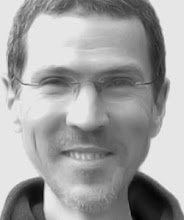
I have a saying, “it’s never too hot”. I mean it. No climate can ever be too hot for me. I watch the international weather report on television and keep an eye out for “Muscat” where the average daytime temperature hovers at around 40 degrees Celcius, and I think to myself “if only”! My disability has left me really thin, literally skin and bones, or as one person so aptly put it, a “stickman”. The result is that I lose heat rapidly, and when I do, I struggle to regain it.
The added problem is that my limited muscle strength turns me off wearing layers of warm clothing, gloves, boots, etc. I feel like the proverbial Michelin Man, only less mobile! I’m at my most comfortable in a t-shirt and tracksuit pants, that’s all, and ninety percent of the time I’m also without shoes. My home is my castle, and I like to “walk” around inside it dressed for comfort, not in defiance of the elements. I know people who wear jackets and jerseys inside their own homes. Some even walk around draped in a blanket! It makes no sense to me, unless of course one cannot afford heating.
My hands and fingers feel the cold first, and when they freeze up they stop working, so my priority is always to keep my hands warm. I use a variety of methods, from hugging-a-mug, to immersing my hands into a hand basin of hot water, to holding a nifty gel hand warmer a mate bought me in London. All work, but only for a limited time. The key is my inner body warmth, and for that I need my home to be warm.
It has to be said that our houses in South Africa are not properly insulted, for winter or summer. We live in solid brick and mortar homes but they leak heat like sieves. I recall my first trip to New York in winter, sitting at a window looking out at the snow in the garden, looking down and noticing that the windowsill, and corresponding house wall where I was positioned, was wafer thin, yet I was as warm as toast, while it was snowing outside. For the first time the importance of proper insulation dawned on me. Northern hemisphere prefabricated buildings are better insulated than the most expensive of our southern hemisphere mansions. Somewhere along the way we became lazy in South Africa and missed some important lessons.
Fortunately my wife shares my liking for warmth, which is a good thing. She has more meat on her bones, but will readily admit that she would make a lousy adventure racer, or explorer. Being cold, and possibly wet, is not for her. My mother is the complete opposite. She’s always wanted to travel to the Antarctic, but I warn all interested parties that she will want to sleep with the tent flap open! A good friend of mine has the problem that he likes the cold, and his wife likes the warmth. One of the stranger results of their union is their duvet, which is stitched down the middle, with his side devoid of stuffing, and his wife’s side filled with extra fluff! He sleeps kaalgat, she comes to bed with socks on. Fortunately they love each other!
Only once have we come close to uttering that magical phrase, “I’m too hot”. It was in Las Vegas where the already hot and dry desert air was reflected back at us off the endless concrete pavements, concrete buildings, tarred road surfaces, metal signage, etc. Every hard surface acted as a magnifier and multiplier of the heat. Little wonder they are draining the Colorado River dry to irrigate their fountains and water features. Anything to soften the surroundings. The effect was heightened by the near Arctic setting on all the interior air-conditioning. It made the movement into, or out of, buildings something of a body shocking experience!
By the time you read this we will be moving into winter and I will be eyeing Muscat on the television with envy, and my panel heater with new found affection, whilst the electricity box grins knowingly across at me in the kitchen! We will be entering the season where getting warm, and staying warm, becomes my major priority. Fortunately there are a couple of alternative internal heating methods, such as a good risotto, jambalaya, or Loretta’s famous putanesca, and of course red wine! Sampled often, and in quantity, they help keep the big chill at bay, until we can once again feel the heat.
Wednesday, April 14, 2010

Sunday, March 14, 2010
Tools Of A Primitive Man
I recall someone, somewhere, sometime saying that you could fix a Ford with a piece of wire, a screwdriver and some tape. It is presumeably an urban legend, we all know that Ford's are not worth fixing. It does however serve to remind me of a couple of items which I find indispensable, and which on a scale of high tech to low tech would rank as positively caveman-ish! They are small, unobtrusive, but without them my days would be more difficult and challenging, and I have reached that stage in life where simple and easy are good.
The first is my wheelchair footrest, which consists of a piece of knotted string. OK, so it is not actually string, more parachute cord, but it is knotted. I’ve never found wheelchair footrests comfortable. My first wheelchair, which I took delivery of in 1974, not long after the wheel was invented, came with fixed footrests. They only served two purposes, to carry my school suitcases and those of my mates, and to clip stupid people’s ankles. The next wheelchair came with removable footrests, and that is precisely what happened to them, they were removed. Like the soles of my shoes, my footrests have always remained in pristine condition, untouched my human feet. I’ve been through four sets of footrests, all as shiny new the day I passed them on as the day they arrived. I prefer my piece of knotted string, slung between the two side frames of the chair. It’s a bit hard on my tender bare feet, my usual choice for daily footwear, so I sometimes resort to a converted shoulder bag strap which helps spread the tension across the underside of my feet. With my piece of knotted string my wheelchair is shorter, lighter, better balanced, and as a bonus I can store my footrest in my top pocket!
The second indispensable item I encountered by chance. Many years ago a friend who was in the manufacturing industry loaned me a small folding ruler, but after I had discovered its hidden abilities she never got it back. A little over 15cm long when folded, it can be extended zig-zag fashion to a metre in length. More importantly, each folding section has a notch at the 90 degree point, so one can fold an L, or U, shape into it. I can fold it out to its full length, or I can keep it short and compact, my choice. It makes a brilliant reacher, pusher, puller, or pointer, and it’s quite handy for measuring things too.
Perhaps my most useful, and used, caveman tool is a simple wooden stick. A 40cm wooden dowel, with a rubber stopper on each end. It’s my magic wand, my swizzle stick, my cattle prod. I use it to turn on lights, push television and computer buttons, answer the intercom, and even to cough. Yes, as strange as it sounds, if I’m suffering from some chest congestion, I place one end of the stick against a wall, and the other end on my sternum, lean forward against the stick, and cough. The resistance and pressure generated against my chest allows me a stronger cough. Works like a charm!
Last, but by no means least is my drinking straw. I’ve never been able to sit up in bed, or prop myself up on my side, so since my long months in hospital over 30 years ago I have used a flexible straw when schlurping my morning or evening mug of coffee. I have vivid memories of the milk which we we served in hospital as being delicious. We had competitions with the nurses to suck the milk out our glasses faster than they could pour. The strange things one remembers! Previously I had a source of used drip tubes, which worked perfectly. These days I buy clear plastic tubing, sold by the metre, which keeps me in touch with my coffee for many years.
No doubt, in a medical equipment supply store, one can find fancy aluminium and plastic versions of most of the abovementioned devices. There’s a gadget for virtually everything these days, but I am comfortable with my caveman tools. They cost me nothing, I developed them myself, they’re all an integral part of my home. Heck, if Eskom shuts off our electricity I might even be able to use my magic wand to make fire in my cave!
The first is my wheelchair footrest, which consists of a piece of knotted string. OK, so it is not actually string, more parachute cord, but it is knotted. I’ve never found wheelchair footrests comfortable. My first wheelchair, which I took delivery of in 1974, not long after the wheel was invented, came with fixed footrests. They only served two purposes, to carry my school suitcases and those of my mates, and to clip stupid people’s ankles. The next wheelchair came with removable footrests, and that is precisely what happened to them, they were removed. Like the soles of my shoes, my footrests have always remained in pristine condition, untouched my human feet. I’ve been through four sets of footrests, all as shiny new the day I passed them on as the day they arrived. I prefer my piece of knotted string, slung between the two side frames of the chair. It’s a bit hard on my tender bare feet, my usual choice for daily footwear, so I sometimes resort to a converted shoulder bag strap which helps spread the tension across the underside of my feet. With my piece of knotted string my wheelchair is shorter, lighter, better balanced, and as a bonus I can store my footrest in my top pocket!
The second indispensable item I encountered by chance. Many years ago a friend who was in the manufacturing industry loaned me a small folding ruler, but after I had discovered its hidden abilities she never got it back. A little over 15cm long when folded, it can be extended zig-zag fashion to a metre in length. More importantly, each folding section has a notch at the 90 degree point, so one can fold an L, or U, shape into it. I can fold it out to its full length, or I can keep it short and compact, my choice. It makes a brilliant reacher, pusher, puller, or pointer, and it’s quite handy for measuring things too.
Perhaps my most useful, and used, caveman tool is a simple wooden stick. A 40cm wooden dowel, with a rubber stopper on each end. It’s my magic wand, my swizzle stick, my cattle prod. I use it to turn on lights, push television and computer buttons, answer the intercom, and even to cough. Yes, as strange as it sounds, if I’m suffering from some chest congestion, I place one end of the stick against a wall, and the other end on my sternum, lean forward against the stick, and cough. The resistance and pressure generated against my chest allows me a stronger cough. Works like a charm!
Last, but by no means least is my drinking straw. I’ve never been able to sit up in bed, or prop myself up on my side, so since my long months in hospital over 30 years ago I have used a flexible straw when schlurping my morning or evening mug of coffee. I have vivid memories of the milk which we we served in hospital as being delicious. We had competitions with the nurses to suck the milk out our glasses faster than they could pour. The strange things one remembers! Previously I had a source of used drip tubes, which worked perfectly. These days I buy clear plastic tubing, sold by the metre, which keeps me in touch with my coffee for many years.
No doubt, in a medical equipment supply store, one can find fancy aluminium and plastic versions of most of the abovementioned devices. There’s a gadget for virtually everything these days, but I am comfortable with my caveman tools. They cost me nothing, I developed them myself, they’re all an integral part of my home. Heck, if Eskom shuts off our electricity I might even be able to use my magic wand to make fire in my cave!
Thursday, February 11, 2010
The View From Way Down There
I call my column the view from down here because I believe the millions of us in wheelchairs do experience life from a different level, both physically and emotionally. As a schoolchild I recall joking with the tall kids and asking “What’s the weather like up there?”. We talk about overviews, helicopter views and worm’s eye views. I discovered another view the other day, one a little lower than mine, but brimming with enthusiasm and confidence, but let me start at the beginning . . .
Some time ago a father of a newly disabled daughter commented on an Internet discussion forum that there were no disabled children around. The thought stuck with me, and I wondered whether this was a fact, or merely a perception. Are there relatively fewer disabled children than disabled adults? The answer is both yes and no. Yes there are fewer children than adults, but there are also far too many disabled children. Research conducted at a care home for mentally disabled children revealed that 80% of them came about their state through motor vehicle accidents when their heads were smashed against windshields and dashboards. Add diseases such as ours into the equation, and birth defects, and other accidents and the numbers sadly mount.
So why then do we see so few disabled children in public? I believe the answer lies in a sense of embarrassment on the part of the parents and broader family. I can recall my mother telling me of the torrid times she had to endure when taking me out in public as a disabled child. Endless questioning, and often ridicule and chastisement. Fortunately for me, my mother had a thick skin, or she deliberately put one on. She brushed off the scrutiny and kept me in the public eye. Unfortunately she appeared to be in the minority.
In our local shopping mall, at any one time you can probably count 75 to 100 children under the age of 13, go to the larger malls and one can double or treble that figure easily. Now if 3% of the population is mobility disabled, a conservative figure, then one should see 2 to 3 disabled kids, or 4 to 6, or more. Yet one sees none. Where are they? Why are they being hidden away? What will become of them when they grow up?
In the midst of all this baggage, and social commentary, imagine my surprise therefore to chance upon five year old Angelo as he motored around the V&A Waterfront in his Permobil “Koala” powerchair. With not a care in the world he breezed in and out of stores, flicking the joystick with utmost precision and dexterity. We met in between the coats and trouser racks of an outdoor apparel store, and his interest was immediately pricked by my powerchair. Now we know that when two males meet it is only a matter of time before they begin talking about cars. When two powerchair males meet, well, it is only a matter of time before they begin talking about their motors. And so Angelo quickly demonstrated to me that although his chair might have been lower to the ground than mine it did however have seat elevation, and tilt. He also asked about top speed. Who wouldn’t? I countered that my rapidly greying hair permitted me to travel a bit more sedately. Whew! Off the hook. Then we moved on to manoeuvrability, and control switches, and joystick mounts. Heady stuff that would have a Formula One commentator scrambling for words.
What struck me during our brief time together was the confidence, control and calm that young Angelo possessed. He wasn’t concerned about the throngs of people in the mall, in his powerchair he was his own man. He was in control of his body and the environment he was in. He was secure, and comfortable and confident in his own ability to propel himself. I knew exactly how he felt.
Watching young Angelo weave effortlessly through the shopping mall I could not help but wish that his future would be as clear as the freedom he was experiencing in the moment. Wouldn’t it be liberating if there were more Angelo’s out in the public view? Wouldn’t it be enlightening if more people could be inspired by his presence? Wouldn’t it be encouraging if the public infrastructure was more accommodating to disabled children?
Education, social interaction, employment, and building a home and family were the last things on Angelo’s mind in the V&A Waterfront, and rightly so. Right then, right there, despite his profound disability, he was able to “walk” with his Mom and Dad and siblings, just like all the other kids in the mall.
Some time ago a father of a newly disabled daughter commented on an Internet discussion forum that there were no disabled children around. The thought stuck with me, and I wondered whether this was a fact, or merely a perception. Are there relatively fewer disabled children than disabled adults? The answer is both yes and no. Yes there are fewer children than adults, but there are also far too many disabled children. Research conducted at a care home for mentally disabled children revealed that 80% of them came about their state through motor vehicle accidents when their heads were smashed against windshields and dashboards. Add diseases such as ours into the equation, and birth defects, and other accidents and the numbers sadly mount.
So why then do we see so few disabled children in public? I believe the answer lies in a sense of embarrassment on the part of the parents and broader family. I can recall my mother telling me of the torrid times she had to endure when taking me out in public as a disabled child. Endless questioning, and often ridicule and chastisement. Fortunately for me, my mother had a thick skin, or she deliberately put one on. She brushed off the scrutiny and kept me in the public eye. Unfortunately she appeared to be in the minority.
In our local shopping mall, at any one time you can probably count 75 to 100 children under the age of 13, go to the larger malls and one can double or treble that figure easily. Now if 3% of the population is mobility disabled, a conservative figure, then one should see 2 to 3 disabled kids, or 4 to 6, or more. Yet one sees none. Where are they? Why are they being hidden away? What will become of them when they grow up?
In the midst of all this baggage, and social commentary, imagine my surprise therefore to chance upon five year old Angelo as he motored around the V&A Waterfront in his Permobil “Koala” powerchair. With not a care in the world he breezed in and out of stores, flicking the joystick with utmost precision and dexterity. We met in between the coats and trouser racks of an outdoor apparel store, and his interest was immediately pricked by my powerchair. Now we know that when two males meet it is only a matter of time before they begin talking about cars. When two powerchair males meet, well, it is only a matter of time before they begin talking about their motors. And so Angelo quickly demonstrated to me that although his chair might have been lower to the ground than mine it did however have seat elevation, and tilt. He also asked about top speed. Who wouldn’t? I countered that my rapidly greying hair permitted me to travel a bit more sedately. Whew! Off the hook. Then we moved on to manoeuvrability, and control switches, and joystick mounts. Heady stuff that would have a Formula One commentator scrambling for words.
What struck me during our brief time together was the confidence, control and calm that young Angelo possessed. He wasn’t concerned about the throngs of people in the mall, in his powerchair he was his own man. He was in control of his body and the environment he was in. He was secure, and comfortable and confident in his own ability to propel himself. I knew exactly how he felt.
Watching young Angelo weave effortlessly through the shopping mall I could not help but wish that his future would be as clear as the freedom he was experiencing in the moment. Wouldn’t it be liberating if there were more Angelo’s out in the public view? Wouldn’t it be enlightening if more people could be inspired by his presence? Wouldn’t it be encouraging if the public infrastructure was more accommodating to disabled children?
Education, social interaction, employment, and building a home and family were the last things on Angelo’s mind in the V&A Waterfront, and rightly so. Right then, right there, despite his profound disability, he was able to “walk” with his Mom and Dad and siblings, just like all the other kids in the mall.
Tuesday, January 5, 2010
Attitude
When I hear the term "attitude" being applied to an individual I have this picture pop up in my mind of a gangster rapper, hand on hip, staring over the top of their shades, or one of those big African American ladies who talks while wiggling her neck from side to side.
It's a Hollywood vision, but attitude is more than a show. It is a philosophy, a mindset, a character trait, one we, as disabled, need plenty of. It is the space that separates success from failure, happiness from despair, achievement from indifference. Attitude is not necessarily something you "have", like a bad mood, or a common cold. It is rather something which is inside one's core being, a sort of "inner outlook" which governs how we go about our lives. Some people with really profound levels of disability achieve success, whilst others with relatively minor afflictions struggle and often fall by the wayside. No-one knows how our disability affects our lives and our persona other than ourselves, but our attitude to it, and the environment surrounding us is what determines whether we succeed or fail in managing and living with our disability.
Attitude is influenced by our knowledge, education, skills, support structure and economic situation. I say influenced, because having one or more of these is no guarantee of success. It is what we make of them which really matters. They are floating opportunities bobbing around us in a swimming pool. We can reach out and embrace one or more of them, or we can push them away. Either way it will affect how we cope in that pool, how long we can stay afloat, and whether we enjoy the swim!
This is perhaps particularly relevant to MD sufferers since so many of us contracted the disease as children. How we were raised influenced our attitude, and formed the foundation of our adult character. If that character did not "fit" with our later reality of education, employment, independent living, friendships, etc then it placed us at odds with all around us, a situation which would in turn influence our attitude. It is easy to see how a negative attitude can quickly become self-perpetuating, but of course the opposite is also true. It is vital that young disabled individuals are developed to have a high self-esteem, positive view of themselves, and never under-estimated. Failure to do so will damage their attitude, something which could end up being as debilitating as their physical condition.
Into this whole attitude equation we also need to factor in our life expectations. What do we expect from family, friends, work, the government or religion? The combination of our attitude "to" things, and our expectations "of" things determines how we are likely to deal with life. Those who enjoy success in their disabled lives generally have the ability to blur the lines between disability and able-bodied.
We cannot clearly define exactly what attitude is but we know that the presence of disability can magnify its effects. A bad environment can affect us negatively, but we can grab hold of a good thing, absorb it, and use it to break out into a better environment. Whether we take advantage of opportunities or allow them to overwhelm us is determined by our attitude. It is something which is very definitely within our control. We cannot change the way we feel, but we can change the way we see things, and that will change the way we feel.
Some believe we are either "hard wired", like an electrical circuit, to deal with disability, or we are not. You can cope, or you can't. Simple as that. It is an interesting theory, but not one I am entirely convinced of. I believe we can change, and just as our disability changes us physically so we can change mentally and emotionally to adapt to it. Our biggest obstacle is sitting on top of our shoulders. As our set of abilities changes so we need to assess what we can do, and live within those abilities. We have a disability which is trying to take control of our lives and our attitude is going to determine how we keep control. The physical realities can often outweigh optimism but that's not a reason to give in. It takes time and a re-learning of life, to gain the ability to live freely.
Attitude is a defining characteristic in determining if an individual will reach their full potential, irrespective of disability. Someone once said life is 10% of what happens to you and 90% of what you make of it. In our quest to find our goals and the means to achieve them it might be worthwhile to reflect on these words . . .
"So judge not another for their toil,
It’s to themselves they answer in life,
Be it truth or lie,
To God they answer when they die,
The real why." . . . . . (Ralf, Nikkei)
It's a Hollywood vision, but attitude is more than a show. It is a philosophy, a mindset, a character trait, one we, as disabled, need plenty of. It is the space that separates success from failure, happiness from despair, achievement from indifference. Attitude is not necessarily something you "have", like a bad mood, or a common cold. It is rather something which is inside one's core being, a sort of "inner outlook" which governs how we go about our lives. Some people with really profound levels of disability achieve success, whilst others with relatively minor afflictions struggle and often fall by the wayside. No-one knows how our disability affects our lives and our persona other than ourselves, but our attitude to it, and the environment surrounding us is what determines whether we succeed or fail in managing and living with our disability.
Attitude is influenced by our knowledge, education, skills, support structure and economic situation. I say influenced, because having one or more of these is no guarantee of success. It is what we make of them which really matters. They are floating opportunities bobbing around us in a swimming pool. We can reach out and embrace one or more of them, or we can push them away. Either way it will affect how we cope in that pool, how long we can stay afloat, and whether we enjoy the swim!
This is perhaps particularly relevant to MD sufferers since so many of us contracted the disease as children. How we were raised influenced our attitude, and formed the foundation of our adult character. If that character did not "fit" with our later reality of education, employment, independent living, friendships, etc then it placed us at odds with all around us, a situation which would in turn influence our attitude. It is easy to see how a negative attitude can quickly become self-perpetuating, but of course the opposite is also true. It is vital that young disabled individuals are developed to have a high self-esteem, positive view of themselves, and never under-estimated. Failure to do so will damage their attitude, something which could end up being as debilitating as their physical condition.
Into this whole attitude equation we also need to factor in our life expectations. What do we expect from family, friends, work, the government or religion? The combination of our attitude "to" things, and our expectations "of" things determines how we are likely to deal with life. Those who enjoy success in their disabled lives generally have the ability to blur the lines between disability and able-bodied.
We cannot clearly define exactly what attitude is but we know that the presence of disability can magnify its effects. A bad environment can affect us negatively, but we can grab hold of a good thing, absorb it, and use it to break out into a better environment. Whether we take advantage of opportunities or allow them to overwhelm us is determined by our attitude. It is something which is very definitely within our control. We cannot change the way we feel, but we can change the way we see things, and that will change the way we feel.
Some believe we are either "hard wired", like an electrical circuit, to deal with disability, or we are not. You can cope, or you can't. Simple as that. It is an interesting theory, but not one I am entirely convinced of. I believe we can change, and just as our disability changes us physically so we can change mentally and emotionally to adapt to it. Our biggest obstacle is sitting on top of our shoulders. As our set of abilities changes so we need to assess what we can do, and live within those abilities. We have a disability which is trying to take control of our lives and our attitude is going to determine how we keep control. The physical realities can often outweigh optimism but that's not a reason to give in. It takes time and a re-learning of life, to gain the ability to live freely.
Attitude is a defining characteristic in determining if an individual will reach their full potential, irrespective of disability. Someone once said life is 10% of what happens to you and 90% of what you make of it. In our quest to find our goals and the means to achieve them it might be worthwhile to reflect on these words . . .
"So judge not another for their toil,
It’s to themselves they answer in life,
Be it truth or lie,
To God they answer when they die,
The real why." . . . . . (Ralf, Nikkei)
Tuesday, December 1, 2009
I'm Walking Backwards To Christmas
With apologies to Spike Milligan!
His famous ditty goes . . .
"I'm walking backwards to Christmas,
Across the Irish Sea,
I'm walking backwards to Christmas,
It's the only thing for me,
I've tried walking sideways,
And walking to the front,
But people just look at me,
And say it's a publicity stunt".
I don't actually go out with the express purpose of riding over able-bod's feet. I drive in a predictable manner. No zig-zagging, or stop-starting. But, able-bod's appear to see nothing below their eye level. They also appear to follow Spike Milligan's example and walk backwards more than they walk forwards. It all comes down to a simple affliction, these people don't look where their feet are pointing. We've got MD, kids munching fast food supposedly have ADD, but these folks have DoLoWheTFAP.
There is something strange about the way people walk. It's not noticeable in open spaces, but put them in a busy public place, and they all begin to walk backwards. They step backwards in shopping queues, they step backwards from shop windows, they walk backwards whilst talking to friends. Of course, to us invalids, the genuinely amusing thing is that look of distress, pain, and often anger on the offending able-bods face when they bash into you. Well, amusing is possibly the wrong word, maybe "satisfying" is better. It certainly is satisfying seeing them ricochet off my 140kg powerchair clutching a damaged foot or knee. Bingo! 20 points for another able-bod!
Add cellular technology to the equation and you really spice things up. Now, not only is their sense of direction gone, but their minds as well. Maybe it's the dangerous emissions radiating from the cellphone. Whatever it is, it appears to have the same reaction on the human brain whether they are driving a car, or walking. When the mouth and ear are otherwise engaged all contact is lost with the world, and by that I mean the entire world, even that just one metre away.
My years of wheeling has led me to the conclusion that, at least from a pedestrian point of view, humans are closely related to squirrels . . . you know, in the way squirrels run, hesitate, run, hesitate across roads. Well able-bod's do the same, they walk, stop, walk, stop. I recall one memorable incident in a local mall when an able-bod saw me coming and stopped, so I aimed to pass in front of him, then he stepped forward, so I compensated to drive around his back, then he stopped again, so I corrected, then he stepped forward again, and I nailed him, both feet, right over the arches. When you're as dumb as he was then you deserve to get run over. It was the Darwin Theory alive and well and on public view. This lack of pedesrian skills generates a quite satisfying crunching sound of bone being compressed between solid rubber and solid floor . . . usually followed by a high pitched squeal.
My first powerchair was very lightweight, and people bumping into me, and stumbling over me, used to knock the chair off its four wheels. They then used to try and compensate by reaching out and grabbing me, partly to steady themselves, and partly out of guilt to steady me. This resulted in my being grabbed by complete strangers around the head and shoulder region. Not a socially acceptable practice in my opinion. Fortunately the weight and stability of my present powerchair is re-assuring, for me, and downright scary for the squirrel. You would have to be a MacDonalds gold card client to knock my powerchair over. I feel secure, both physically, and in the knowledge that in any coming together of powerchair and squirrel, the rodent will always come off second best. I also no longer get groped or grabbed because while they're doing the two-step-of-pain I am long gone.
I drive my powerchair very well and responsibly, I do not speed excessively in public places, I am careful around small children, and I never bump into furniture. I am however unable to read people's minds, so when they exhibit squirrel-like behaviour in my path I do not feel even the slightest bit of guilt over crushing toes or clipping heels. Spike would have approved.
His famous ditty goes . . .
"I'm walking backwards to Christmas,
Across the Irish Sea,
I'm walking backwards to Christmas,
It's the only thing for me,
I've tried walking sideways,
And walking to the front,
But people just look at me,
And say it's a publicity stunt".
I don't actually go out with the express purpose of riding over able-bod's feet. I drive in a predictable manner. No zig-zagging, or stop-starting. But, able-bod's appear to see nothing below their eye level. They also appear to follow Spike Milligan's example and walk backwards more than they walk forwards. It all comes down to a simple affliction, these people don't look where their feet are pointing. We've got MD, kids munching fast food supposedly have ADD, but these folks have DoLoWheTFAP.
There is something strange about the way people walk. It's not noticeable in open spaces, but put them in a busy public place, and they all begin to walk backwards. They step backwards in shopping queues, they step backwards from shop windows, they walk backwards whilst talking to friends. Of course, to us invalids, the genuinely amusing thing is that look of distress, pain, and often anger on the offending able-bods face when they bash into you. Well, amusing is possibly the wrong word, maybe "satisfying" is better. It certainly is satisfying seeing them ricochet off my 140kg powerchair clutching a damaged foot or knee. Bingo! 20 points for another able-bod!
Add cellular technology to the equation and you really spice things up. Now, not only is their sense of direction gone, but their minds as well. Maybe it's the dangerous emissions radiating from the cellphone. Whatever it is, it appears to have the same reaction on the human brain whether they are driving a car, or walking. When the mouth and ear are otherwise engaged all contact is lost with the world, and by that I mean the entire world, even that just one metre away.
My years of wheeling has led me to the conclusion that, at least from a pedestrian point of view, humans are closely related to squirrels . . . you know, in the way squirrels run, hesitate, run, hesitate across roads. Well able-bod's do the same, they walk, stop, walk, stop. I recall one memorable incident in a local mall when an able-bod saw me coming and stopped, so I aimed to pass in front of him, then he stepped forward, so I compensated to drive around his back, then he stopped again, so I corrected, then he stepped forward again, and I nailed him, both feet, right over the arches. When you're as dumb as he was then you deserve to get run over. It was the Darwin Theory alive and well and on public view. This lack of pedesrian skills generates a quite satisfying crunching sound of bone being compressed between solid rubber and solid floor . . . usually followed by a high pitched squeal.
My first powerchair was very lightweight, and people bumping into me, and stumbling over me, used to knock the chair off its four wheels. They then used to try and compensate by reaching out and grabbing me, partly to steady themselves, and partly out of guilt to steady me. This resulted in my being grabbed by complete strangers around the head and shoulder region. Not a socially acceptable practice in my opinion. Fortunately the weight and stability of my present powerchair is re-assuring, for me, and downright scary for the squirrel. You would have to be a MacDonalds gold card client to knock my powerchair over. I feel secure, both physically, and in the knowledge that in any coming together of powerchair and squirrel, the rodent will always come off second best. I also no longer get groped or grabbed because while they're doing the two-step-of-pain I am long gone.
I drive my powerchair very well and responsibly, I do not speed excessively in public places, I am careful around small children, and I never bump into furniture. I am however unable to read people's minds, so when they exhibit squirrel-like behaviour in my path I do not feel even the slightest bit of guilt over crushing toes or clipping heels. Spike would have approved.
Monday, November 2, 2009
The Power Of Power
Mankind underestimates the subtleties of body language. It’s a skill that we develop through observation and experience, and then carry with us subliminally for the rest of our lives. Well anyway, some of us do, others don’t. We learn it through watching our parents, family and peers. They are learned rather than taught, for no good reason other than that most parents do not understand the power, or possibly even understand the role, of body language. If able-bodied people struggle to come to grips with body language then how much more so is it for the mobility impaired?
Research has shown that female chimpanzees and gorillas that are born in captivity do not always have the skills to be good mothers. It’s a skill learned, not inherited or genetically ingrained. In much the same way the skills of body language are learned, and if the environment is such that learning is inhibited then we loose out.
Interaction with our fellow man is an integral part of our human nature. This is most often seen as a verbal medium, but body positioning, body movement, and gestures play a vital role. Gestures are not limited to hand, arm, or head movements, they are also performed with the whole body. Consider a meeting of three people . . . hold the meeting firstly over a telephone (i.e. no visual contact), now hold it around a table with everyone being seated, and then hold the same meeting with the three standing freely in an open room. The results would differ in each case, as the parties involved were able to utilise additional skills. Organisations such as Toastmasters who deal with communication every day around the world will tell you of the importance of body positioning when speaking. The body can be used to project positive or negative, re-assuring or distancing images. It can draw the audience in, or push them away. It can emphasize a point, or dismiss it. These rules apply regardless of whether the audience is measured in hundreds, a small group, or one.
Severely mobility impaired people will understand and appreciate the frustrations of being “rooted to the spot”. The mind knows what it wants, but the body cannot provide the solution. In the office, at a cocktail party, at home, able-bodied people move around one, stepping in and out of one’s personal space, in and out of conversation, in and out of one’s sphere of influence. In the game of body language it is not so much a question of “mobility”, rather one of “ability”. The ability to move during a conversation, the ability to gesture, the ability to turn to face someone, the ability to turn one’s back, the ability to “step” forward to greet someone, and the ability to “leave”. These are the subtle movements that are only measured in seconds taken, or centimetres moved, but the messages they convey are huge. Many severely disabled people complain of feeling like seated puppets, able to speak, but dependent on another for movement and motion. The powerchair can make the first move, the powerchair can control proceedings, and the powerchair can lead. A powerchair puts these abilities in their own hands. A powerchair user can achieve this with the flick of a joystick. Gone are the struggling movements to move a wheelchair on deep pile carpets. One can re-position without even breaking eye contact!
The powerchair can be an incredible accessory to communication if used effectively. It can be open and inclusive when positioned to face one’s audience. It can be furtive and elusive if kept on the move, never allowing the subject to settle. It can be final and conclusive when swiftly turned away. Whilst these initially may sound manipulative, pre-meditated, or calculated they quickly become natural when used in conjunction with the rest of one’s communication media, such as eyes, voice, and hands. It’s a transition phase, only lasting as long as it takes one to catch up with able-bodied mankind! Few powerchair users have been motorised since their youngest years. Most only manage to obtain access to a powerchair in their teens or later. This means that they have essentially missed out on those formative years of body language development.
It’s a strange thing but a powerchair gives one a distinctly physical presence. Somehow a normal manual wheelchair projects itself as a “chair with wheels”, but a powerchair demands attention. When you cruise into a room people notice! It becomes an extension of one’s personality. I often find myself “pacing” in the powerchair whilst waiting for lifts, something which is impossible in my manual chair. I can impose myself by riding straight up to someone, or can calm things down by slowly idling through a shopping mall, or lift the pace considerably when I’m purposeful or in a hurry. If I’m feeling full of fun I find myself weaving around furniture, spinning circles in shopping malls, speeding up and slowing down, or zooming over the grass lawns of Kirstenbosch when everyone else is sticking to the paths. If I’m annoyed and in a crowd I can hold my line and force people to avoid me. I can sneak up on my wife when she’s engrossed in a book. I can walk my own line when out with friends. It’s the games we all play.
Parents of severely mobility-impaired children need to be more aware than most of the importance of these skills, how their child can learn them, and more importantly how to put them to good use. As a member of the human race we have to accept that communication is integral to our makeup, we are sociable animals. In order for disabled children to achieve equity within the broader community they need to use communication and personality skills even more effectively than their able-bodied counterparts in order to compensate for physical shortfalls. Using a powerchair need not be seen as slipping down the ability ladder. Far from it. It is an empowering instrument, it gives more than it takes. It allows one to say “I am in control, I decide when and how I wish to move”. It’s the power of power.
Research has shown that female chimpanzees and gorillas that are born in captivity do not always have the skills to be good mothers. It’s a skill learned, not inherited or genetically ingrained. In much the same way the skills of body language are learned, and if the environment is such that learning is inhibited then we loose out.
Interaction with our fellow man is an integral part of our human nature. This is most often seen as a verbal medium, but body positioning, body movement, and gestures play a vital role. Gestures are not limited to hand, arm, or head movements, they are also performed with the whole body. Consider a meeting of three people . . . hold the meeting firstly over a telephone (i.e. no visual contact), now hold it around a table with everyone being seated, and then hold the same meeting with the three standing freely in an open room. The results would differ in each case, as the parties involved were able to utilise additional skills. Organisations such as Toastmasters who deal with communication every day around the world will tell you of the importance of body positioning when speaking. The body can be used to project positive or negative, re-assuring or distancing images. It can draw the audience in, or push them away. It can emphasize a point, or dismiss it. These rules apply regardless of whether the audience is measured in hundreds, a small group, or one.
Severely mobility impaired people will understand and appreciate the frustrations of being “rooted to the spot”. The mind knows what it wants, but the body cannot provide the solution. In the office, at a cocktail party, at home, able-bodied people move around one, stepping in and out of one’s personal space, in and out of conversation, in and out of one’s sphere of influence. In the game of body language it is not so much a question of “mobility”, rather one of “ability”. The ability to move during a conversation, the ability to gesture, the ability to turn to face someone, the ability to turn one’s back, the ability to “step” forward to greet someone, and the ability to “leave”. These are the subtle movements that are only measured in seconds taken, or centimetres moved, but the messages they convey are huge. Many severely disabled people complain of feeling like seated puppets, able to speak, but dependent on another for movement and motion. The powerchair can make the first move, the powerchair can control proceedings, and the powerchair can lead. A powerchair puts these abilities in their own hands. A powerchair user can achieve this with the flick of a joystick. Gone are the struggling movements to move a wheelchair on deep pile carpets. One can re-position without even breaking eye contact!
The powerchair can be an incredible accessory to communication if used effectively. It can be open and inclusive when positioned to face one’s audience. It can be furtive and elusive if kept on the move, never allowing the subject to settle. It can be final and conclusive when swiftly turned away. Whilst these initially may sound manipulative, pre-meditated, or calculated they quickly become natural when used in conjunction with the rest of one’s communication media, such as eyes, voice, and hands. It’s a transition phase, only lasting as long as it takes one to catch up with able-bodied mankind! Few powerchair users have been motorised since their youngest years. Most only manage to obtain access to a powerchair in their teens or later. This means that they have essentially missed out on those formative years of body language development.
It’s a strange thing but a powerchair gives one a distinctly physical presence. Somehow a normal manual wheelchair projects itself as a “chair with wheels”, but a powerchair demands attention. When you cruise into a room people notice! It becomes an extension of one’s personality. I often find myself “pacing” in the powerchair whilst waiting for lifts, something which is impossible in my manual chair. I can impose myself by riding straight up to someone, or can calm things down by slowly idling through a shopping mall, or lift the pace considerably when I’m purposeful or in a hurry. If I’m feeling full of fun I find myself weaving around furniture, spinning circles in shopping malls, speeding up and slowing down, or zooming over the grass lawns of Kirstenbosch when everyone else is sticking to the paths. If I’m annoyed and in a crowd I can hold my line and force people to avoid me. I can sneak up on my wife when she’s engrossed in a book. I can walk my own line when out with friends. It’s the games we all play.
Parents of severely mobility-impaired children need to be more aware than most of the importance of these skills, how their child can learn them, and more importantly how to put them to good use. As a member of the human race we have to accept that communication is integral to our makeup, we are sociable animals. In order for disabled children to achieve equity within the broader community they need to use communication and personality skills even more effectively than their able-bodied counterparts in order to compensate for physical shortfalls. Using a powerchair need not be seen as slipping down the ability ladder. Far from it. It is an empowering instrument, it gives more than it takes. It allows one to say “I am in control, I decide when and how I wish to move”. It’s the power of power.
Thursday, October 1, 2009
Where There's A Will, There's A Way
It's a phrase which has rolled off all of our tongues at one time or another, and the trouble with such catchy phrases is that their truth becomes watered down over time. I have, however, recently had two experiences which brought home the true significance of this phrase for me. Both were disability related, one was at a personal level, whilst the other has far broader implications.
The first "will" occurred during a flight from Cape Town to London. Airline flights are always a flashpoint for us disabled travelers, particularly when is comes to the care and well being of our wheelchairs. I always ask for my wheelchair to be stored inside the cabin, in the coat rack, as I am entitled to do under aviation authority regulations. I've seen first hand how the baggage handlers treat wheelchairs and it's not a pretty sight. Most airlines try, and often succeed, in meeting my request. SAA always decline me, but on this flight there was a flight attendant with some savvy. She could see the way. Despite my being loaded into my seat, and my storage request dismissed offhand by her seniors, she, without fanfare, took it upon herself to negotiate for the storage of my wheelchair in the coat rack. She had the will, and knew the way.
Sadly, for the return flight, which happened to be on exactly the same aircraft, I encountered an aircrew which had neither the will, nor did they want to know the way. They were the exact opposite of the abovementioned attendant, instead choosing to be deliberately and calculatedly obstructive. They agreed to my storage request, loaded me into my seat, waited for the aircraft to take off, then told me they had not loaded the wheelchair and had sent it into the hold instead. Some people do not know the way, and never will.
But this story is far bigger than my personal battles with SAA. When I was last in London wheelchair access was possible, but with difficulty. The challenge was physical in the sense of ramps, steps, lifts, etc, but the greatest barrier I encountered was a mental one. London as we all know is a historical city, and the city fathers and their minions down the chain hid behind this historical legacy at every opportunity. All too often one would have the excuse of "this is a Grade 1" building thrown in one's face when looking for a lift, or ramp, or accessable toilet. In 1996 I could not get to certain V&A museum exhibits "because it is a Grade 1 building and we cannot build a lift in", yet they could not explain to me why Starbucks was allowed to have a coffee vending kiosk right on top of the gravestones in Westminster Cathedral.
But time has passed, and legislation has been passed, and it seems that some of the people who were so obstinate have passed as well, passed on that is. It is amazing to see how, when there is the will (or maybe the law) just how creative and innovative architects and builders can be in providing access for wheelchairs. It is equally interesting to see how financial resources can be freed up as well. The entire South Bank has been integrated and paved. One can roll down to Waterloo Station, catch a train (thanks to access ramps) to Hampton Court and tour Henry VIII's castle fitted with lifts and ramps and accessable toilets. Items which ole' Henry probably would have given his eye teeth for! Most of the bridges across the Thames are accessable. The majority of the famous red buses are fitted with wheelchair lifts. A large percentage of the city taxi's provide wheelchair access. Public toilets have private accessable cubicles, with fussy caretakers to boot! The nett result is a historic city which is now relatively easy to navigate in a wheelchair.
Much of the access is unobtrusive, with ramps being integrated with stairs, to the extent that the average Londoner is probably not even aware of its existance. As we have been pointing out to city planners for decades, this not only serves to assist disabled commuters, but also the elderly, mothers with prams, delivery personnel, etc. The cost of this access is negligible relative to all the development taking place, the benefit is potentially huge, as has been shown with the awarding of the 2012 Olympics and Paralympics to the city.
Access is about removing obstacles. Ten years ago London was riddled with obstacles, the largest of which were mental. During this period there has been a mind shift, a big one, and suddenly the obstacles have been cleared away and replaced with opportunities. The way to achieve this turn-around is not very difficult, nor is it expensive, all it requires is the will to do so.
The first "will" occurred during a flight from Cape Town to London. Airline flights are always a flashpoint for us disabled travelers, particularly when is comes to the care and well being of our wheelchairs. I always ask for my wheelchair to be stored inside the cabin, in the coat rack, as I am entitled to do under aviation authority regulations. I've seen first hand how the baggage handlers treat wheelchairs and it's not a pretty sight. Most airlines try, and often succeed, in meeting my request. SAA always decline me, but on this flight there was a flight attendant with some savvy. She could see the way. Despite my being loaded into my seat, and my storage request dismissed offhand by her seniors, she, without fanfare, took it upon herself to negotiate for the storage of my wheelchair in the coat rack. She had the will, and knew the way.
Sadly, for the return flight, which happened to be on exactly the same aircraft, I encountered an aircrew which had neither the will, nor did they want to know the way. They were the exact opposite of the abovementioned attendant, instead choosing to be deliberately and calculatedly obstructive. They agreed to my storage request, loaded me into my seat, waited for the aircraft to take off, then told me they had not loaded the wheelchair and had sent it into the hold instead. Some people do not know the way, and never will.
But this story is far bigger than my personal battles with SAA. When I was last in London wheelchair access was possible, but with difficulty. The challenge was physical in the sense of ramps, steps, lifts, etc, but the greatest barrier I encountered was a mental one. London as we all know is a historical city, and the city fathers and their minions down the chain hid behind this historical legacy at every opportunity. All too often one would have the excuse of "this is a Grade 1" building thrown in one's face when looking for a lift, or ramp, or accessable toilet. In 1996 I could not get to certain V&A museum exhibits "because it is a Grade 1 building and we cannot build a lift in", yet they could not explain to me why Starbucks was allowed to have a coffee vending kiosk right on top of the gravestones in Westminster Cathedral.
But time has passed, and legislation has been passed, and it seems that some of the people who were so obstinate have passed as well, passed on that is. It is amazing to see how, when there is the will (or maybe the law) just how creative and innovative architects and builders can be in providing access for wheelchairs. It is equally interesting to see how financial resources can be freed up as well. The entire South Bank has been integrated and paved. One can roll down to Waterloo Station, catch a train (thanks to access ramps) to Hampton Court and tour Henry VIII's castle fitted with lifts and ramps and accessable toilets. Items which ole' Henry probably would have given his eye teeth for! Most of the bridges across the Thames are accessable. The majority of the famous red buses are fitted with wheelchair lifts. A large percentage of the city taxi's provide wheelchair access. Public toilets have private accessable cubicles, with fussy caretakers to boot! The nett result is a historic city which is now relatively easy to navigate in a wheelchair.
Much of the access is unobtrusive, with ramps being integrated with stairs, to the extent that the average Londoner is probably not even aware of its existance. As we have been pointing out to city planners for decades, this not only serves to assist disabled commuters, but also the elderly, mothers with prams, delivery personnel, etc. The cost of this access is negligible relative to all the development taking place, the benefit is potentially huge, as has been shown with the awarding of the 2012 Olympics and Paralympics to the city.
Access is about removing obstacles. Ten years ago London was riddled with obstacles, the largest of which were mental. During this period there has been a mind shift, a big one, and suddenly the obstacles have been cleared away and replaced with opportunities. The way to achieve this turn-around is not very difficult, nor is it expensive, all it requires is the will to do so.
Subscribe to:
Posts (Atom)